Table of Contents
Candy Franchise Insights and Trends
Ice cream has always been a favorite part of American culinary culture. Not just a product, people love ice cream as a ritual, reward, or reason to stop on the way home or during a vacation. People love it because of the flavor(s), but the emotional connection to a cold cone on a sweltering summer day makes the ice cream industry a perennial favorite of entrepreneurs. It continues to generate serious investor attention year after year.
Emotional appeal and investment merit are two different things. Some ice cream franchises have a lot to offer, while others simply melt away.
When researching the best ice cream franchise opportunities, think beyond brand recognition. Some business models excel more than others, and not every ice cream concept is the same. The differences matter more than many first-time investors realize.
Below, we’ll break down the key things to think about when evaluating ice cream franchise investments, where River Street Sweets® among the rest, and what makes certain concepts more compelling than others.
Why the Ice Cream Franchise Category Still Attracts Investors
The numbers are hard to ignore.
The United States ice cream market was valued at close to $20 billion in 2026 and set to reach $23 billion in 2031. People love ice cream, and premium, artisanal, and experiential frozen treats have expanded within that broader base. This creates a very compelling lane for concepts that think outside the box.
Unlike other categories where consumer preferences shift away from indulgence, ice cream is different. It’s a treat, sure, but it also functions as comfort and celebration. It can be planned or spontaneous. It’s a versatile product that holds up across different economic conditions. Families with kids, tourists, gift buyers, and casual shoppers remain consistent drivers of foot traffic for concepts that position themselves appropriately.
Market Size and Consumer Demand
The premium and artisanal segment is growing faster than the overall category. The U.S. artisanal ice cream market was valued at $2.47 billion in 2025 and is projected to reach $3.96 billion by 2033 at a CAGR of 6.07%, according to a 2026 Research and Markets report. That growth stems from rising consumer demand for high-quality ingredients, unique flavor profiles, and authentic production methods.
Artisan brands now command 30 to 50 percent price premiums over standard products in mainstream retail, and dollar sales in the frozen novelties segment are expected to grow 10 percent between 2024 and 2028, outpacing volume growth.
The verdict? People are buying more ice cream. They’re also paying more for quality, craft, and experience. Standard packaged products sold at grocery or convenience retail face different pressures than a handcrafted, in-store experience model. Most franchise opportunities in this category fall firmly in the latter group.
What to Look for in an Ice Cream Franchise
The most important factors when comparing ice cream franchise opportunities are product depth, operational complexity, consumer experience design, location suitability, and the infrastructure a franchisor provides.
Business Model and Product Depth
Some ice cream franchises focus on a single product category, like soft-serve concepts (Dairy Queen) or hard-scoop specialty (Cold Stone Creamery). Some approach it from a global perspective, such as premium gelato shops. These models have their place, but they also concentrate risk. If consumer preferences shift or seasonality creates a slow period, there is less product diversity to buffer performance.
Concepts with deeper product mixes create more reasons for guests to visit and more purchase occasions across the year. A brand that offers handmade ice cream alongside gelato, chocolates, pralines, fudge, and specialty gifting products is not just an ice cream shop. It’s a destination, and destinations tend to generate stronger repeat traffic than single-purpose retail.
Franchisor Training and Support
Ice cream and frozen dessert operations are more operationally involved than they first appear, especially when handcrafted production is part of the model. Investors without a food service background benefit significantly from franchisors who provide structured training programs, hands-on opening support, and ongoing operational guidance.
The quality of that support infrastructure is worth scrutinizing. A franchisor with decades of operational experience has seen the challenges new franchisees face and has built systems to help navigate them. River Street Sweets® provides comprehensive training and support that covers everything from candy-making techniques and store operations to marketing and procurement, giving franchisees a meaningful head start.
River Street Sweets® as an Ice Cream Franchise Opportunity
River Street Sweets® was founded in Savannah, Georgia in 1973 as a family confections business built around handcrafted Southern sweets, quality ingredients, and genuine hospitality. Over fifty years later, that origin story still shapes what the brand is today.
When most people think of River Street Sweets®, they think of World-Famous Pralines®, Bear Claws, and candied nuts. What they may not immediately realize is that the brand also offers some of the most beloved homemade ice cream and gelato in the South. That combination is a meaningful competitive advantage for franchisees.
Instead of offering a standalone ice cream concept, this is a candy superstore experience with ice cream and gelato woven into a broader product ecosystem. Guests come for the pralines and discover the ice cream. They come for the ice cream and leave with a gift box. This layered purchasing behavior makes the model more than the sum of its parts.
Ice Cream and Gelato: A Dual Advantage
One of the most distinctive aspects of the River Street Sweets® product lineup is the combination of traditional handmade ice cream and gelato served side by side.
Most ice cream franchises offer one or the other. RSS offers both.
Gelato has gained significant consumer traction over the past decade as more shoppers seek premium, lower-fat frozen dessert alternatives that still deliver on flavor and richness. Health-conscious consumers who would bypass a conventional hard-scoop shop often find gelato more appealing. Franchisees who carry both products can serve a broader range of guests and generate more revenue per visit.
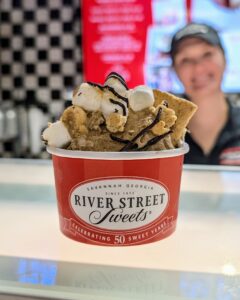
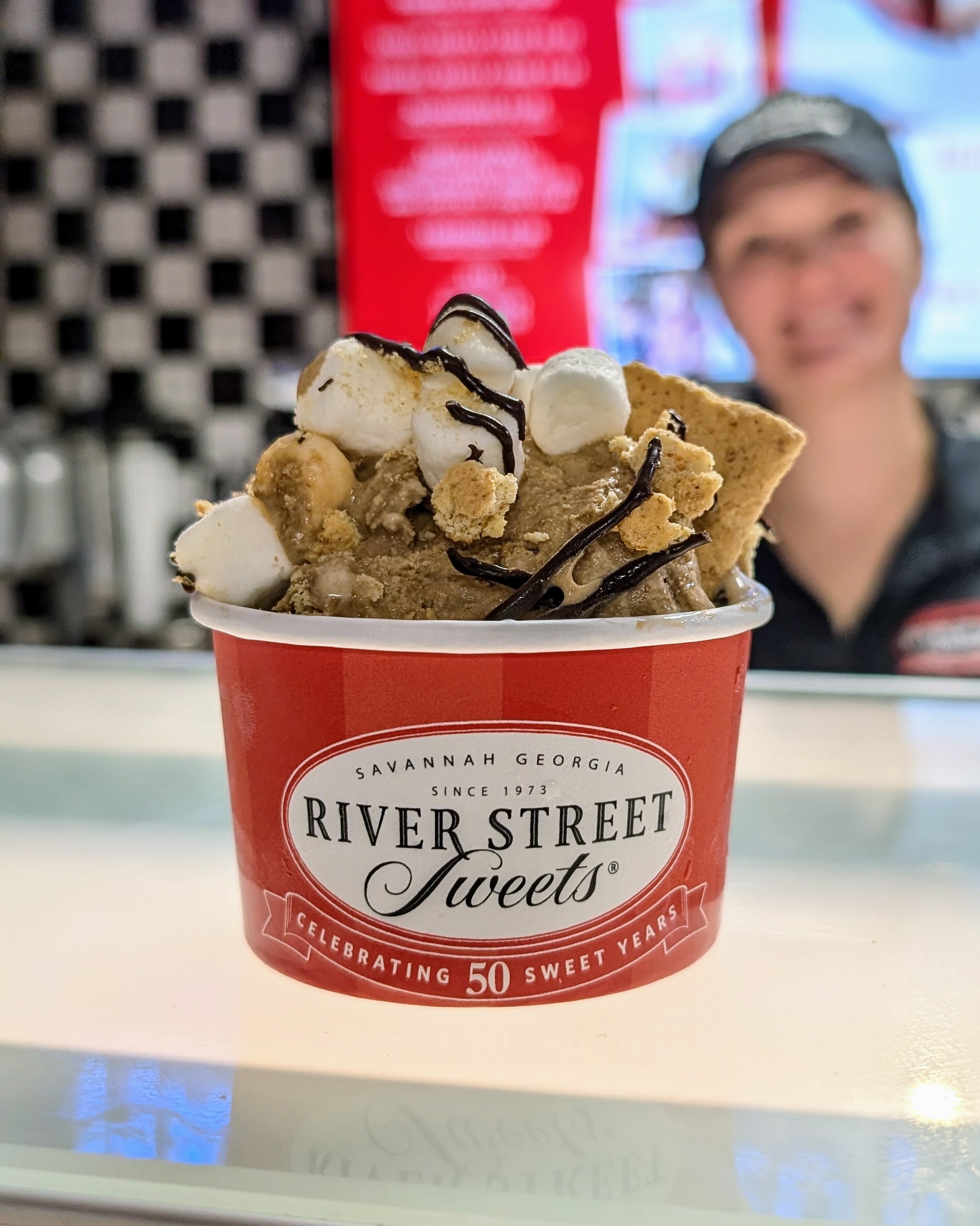
Signature flavors like Pralines N’ Cream® and Bear Claw® ice cream also give franchisees something competitors simply cannot replicate: flavors tied directly to iconic brand heritage, made fresh in-store, and presented as part of a larger confections story.
The Open-Kitchen Experience
River Street Sweets® operates on an open-kitchen model, meaning guests can watch candies, chocolates, and ice cream being made during their visit. More than a novelty, this transparency is a core element of the brand’s guest experience strategy.
Watching ice cream being made in real time creates genuine engagement. It extends time in store. It drives impulse purchases. It generates the kind of shareable, memorable moments that bring guests back and send them out talking about the experience. In an era where experiential retail is increasingly what separates successful brick-and-mortar from struggling ones, that open-kitchen model is a meaningful differentiator.
Investment Overview: What Does an Ice Cream Franchise Cost?
Understanding the investment structure is a critical step in evaluating any franchise opportunity. For River Street Sweets®, the estimated initial investment ranges from $474,050 to $920,500, according to the Franchise Disclosure Document, which includes the $40,000 initial franchise fee.
| Cost Category | Details |
|---|---|
| Franchise Fee | $40,000 (discounts available for qualified military veterans) |
| Estimated Initial Investment | $474,050 – $920,500 |
| Ongoing Royalty Fee | 5% of gross weekly sales |
| Marketing Fund Contribution | Up to 2% of weekly gross sales |
| Technology Fee | $300 per month |
That investment covers the buildout, equipment, initial inventory, and operating capital needed to open and sustain a location through the early stages of business. It also includes access to an established vendor network, structured training, and ongoing franchisee support. These are resources that would take years to build independently.
For context, standalone ice cream concepts can require similarly significant investment just for equipment, refrigeration infrastructure, and build-out, without the brand recognition, supplier relationships, or operational systems that come with an established franchise.
Is an Ice Cream Franchise Right for You?
It depends on what kind of business you want to own and where you plan to operate.
Ice cream and frozen dessert concepts generally perform best in high-traffic, experiential environments: tourist districts, entertainment corridors, lifestyle centers, and areas with consistent pedestrian flow. Seasonality can be a factor in some markets, and investors in four-season climates should think carefully about how product diversity affects year-round revenue stability. A brand with a broader confections portfolio addresses this challenge more naturally than a pure ice cream concept.
The right owner for a River Street Sweets® franchise is someone who connects with the experiential, community-oriented nature of the brand. Someone who values handcrafted quality, enjoys creating memorable guest experiences, and wants to build something with a story behind it.
If that resonates, explore the full River Street Sweets® opportunity today.
Ice Cream Franchise Frequently Asked Questions
What is the most profitable ice cream franchise?
Profitability varies based on location, operational execution, and business model. Concepts with broader product offerings, stronger brand recognition, and experiential formats tend to generate higher per-visit revenue and stronger repeat traffic than simpler, single-product models.
How much does it cost to open an ice cream franchise?
Startup costs vary widely depending on the brand and concept. For River Street Sweets®, the estimated initial investment ranges from $474,050 to $920,500 according to the Franchise Disclosure Document, inclusive of franchise fee, buildout, equipment, inventory, and working capital.
Is an ice cream franchise a good investment?
The frozen dessert category has demonstrated consistent consumer demand and appeals to a broad range of purchase occasions. As with any franchise investment, success depends heavily on location, operational execution, and the strength of the franchisor’s support infrastructure.
What makes River Street Sweets® different from other ice cream franchises?
River Street Sweets® is a full Southern confections experience, not a standalone ice cream shop. Franchisees offer handmade ice cream and gelato alongside pralines, fudge, chocolates, and other handcrafted sweets within an open-kitchen model that has been refined over more than fifty years of operation.
Do I need food service experience to open an ice cream franchise?
No prior food service or candy-making experience is required. River Street Sweets® provides structured training that covers all aspects of the business model, from confection production to store operations and guest experience.