
Table of Contents
Opening an ice cream franchise costs anywhere from $50,000 for a mobile truck to over $1,000,000 for a premium brick-and-mortar location. That’s a wide range, and the difference comes down to brand, format, real estate, and how much of the ice cream you’re actually making on-site.
This guide breaks down franchise fees, build-out costs, ongoing royalties, and the financial requirements you’ll encounter during the qualification process. We’ll also compare investment ranges across popular brands and walk through the steps from inquiry to opening day.
How much does it cost to open an ice cream franchise?
Opening an ice cream franchise typically requires a total investment between $50,000 and $1,000,000 or more. Franchise fees alone range from $15,000 to $50,000, with ongoing royalties averaging 5% to 8% of gross sales. The wide gap in total investment reflects real differences between concepts.
A mobile ice cream truck sits at the lower end of that range. A full brick-and-mortar scoop shop with batch freezers and customer seating lands in the middle. Premium brands with larger footprints and on-site production push toward the upper end.
When you see “total investment” in a Franchise Disclosure Document (FDD), which is the legal document every franchisor provides to prospective buyers), that number covers everything from construction to your first inventory order. So let’s break down what actually goes into that figure.
What does the ice cream franchise initial investment include?
The FDD’s Item 7 lists every cost category you’ll encounter before opening day. Each line item represents real dollars leaving your account, and knowing where the money goes helps you compare opportunities accurately.
Store Build-out and Leasehold Improvements
Build-out covers the construction work that transforms a leased space into a functioning ice cream shop. You’re paying for flooring, plumbing, electrical upgrades, HVAC modifications, and any structural changes the landlord’s space requires. In older buildings, unexpected plumbing or electrical issues can push costs higher than initial estimates.
Equipment and Freezers
Ice cream shops rely on specialized equipment. The type of ice cream you serve determines what you’ll buy. Soft-serve machines cost less than batch freezers. Dipping cabinets, display cases, and point-of-sale systems add to the total. A concept that makes ice cream on-site requires different (and often more expensive) equipment than one that receives pre-made products from a distributor.
Initial Inventory and Ingredients
Your first order of ice cream base, toppings, cones, cups, and packaging supplies comes out of the initial investment. Most franchisors have approved vendor networks, which simplifies ordering but also means you’ll pay the prices those vendors set.
Signage and Branding
Interior and exterior signs, menu boards, and branded décor create the customer experience. Local sign ordinances affect what you can install outside, and the franchisor’s design standards dictate what goes inside.
Opening Marketing and Grand Opening
Most franchisors require a grand opening marketing spend. Local advertising, promotional materials, and event costs all fall here. A strong opening week builds momentum, so this line item matters more than it might appear.
Working Capital and Cash Reserves
Working capital is the money you’ll use to cover payroll, rent, and utilities before the store turns profitable. Franchisors typically require several months of operating expenses as a cash cushion because new stores rarely break even in month one.
Ice Cream Franchise Fee Explained
The franchise fee is a one-time upfront payment, separate from build-out and equipment costs. You’re paying for the right to use the brand’s name, trademarks, recipes, and operating system.
In exchange, franchisees typically receive:
- Training: An initial program covering operations, food safety, and customer service
- Site selection assistance: Help identifying and approving locations that meet the brand’s criteria
- Operations manual: Proprietary systems, recipes, and daily procedures
- Pre-opening support: Guidance through build-out, permitting, and launch
Franchise fees for ice cream concepts generally range from $8,000 to $50,000. A lower fee doesn’t automatically mean a better deal. Consider what support and brand recognition come with that fee, because a $50,000 fee from a well-known brand may deliver more value than a $15,000 fee from an unknown one.
Ongoing royalties and marketing fees for an ice cream franchise
Your costs continue after opening day. Royalty fees, typically 4% to 8% of gross sales, go to the franchisor weekly or monthly. This ongoing payment covers continued support, system improvements, and access to the brand.
Most systems also collect a brand fund or marketing fee, usually 1% to 3% of gross sales. This money funds national or regional advertising campaigns that benefit all franchisees in the system. Both fees are standard across franchise systems, so factor them into your profitability projections from the start.
Liquid capital and net worth requirements for ice cream franchise owners
Franchisors set financial minimums to ensure owners can handle unexpected costs and sustain the business through slower months. You’ll encounter two terms repeatedly during the qualification process.
- Liquid capital: Cash or assets you can convert to cash quickly, such as savings accounts, stocks, or money market funds
- Net worth: Your total assets minus total liabilities
For ice cream franchises, liquid capital requirements typically range from $50,000 to $250,000. Net worth requirements often start around $250,000 and can exceed $500,000 for premium brands. Franchisors set these thresholds because undercapitalized owners face higher failure rates, and the franchisor has a stake in your success.
Ice Cream Shop Franchise Cost Comparison Across Popular Brands
Investment requirements vary widely across ice cream franchise systems. Here’s how several well-known brands compare:
| Brand | Initial Franchise Fee | Total Investment Range | Royalty Fee |
| Cold Stone Creamery | $8,000–$27,000 | $120,700–$655,275 | 6% |
| Baskin-Robbins | $25,000 | $94,350–$402,200 | 5.9% |
| Handel’s Homemade Ice Cream | $50,000 | $460,900–$996,500 | 5% |
| Marble Slab Creamery | $25,000 | $197,800–$427,500 | 6% |
| River Street Sweets | $40,000 | $419,550–$844,000 | Varies |
Cold Stone Creamery Franchise Cost
Cold Stone’s mix-in concept, where ice cream is blended with toppings on a frozen granite stone, has broad name recognition. The lower end of their investment range reflects smaller inline locations, while freestanding stores with drive-thrus push toward the higher end.
Baskin-Robbins Franchise Cost
Baskin-Robbins offers a traditional scoop shop model with 31 flavors. Their investment range accommodates various store formats, including co-branded locations with Dunkin’, which can affect both costs and revenue potential.
Handel’s Homemade Ice Cream Franchise Cost
Handel’s positions itself as a premium homemade ice cream brand. The higher investment reflects larger store footprints and on-site production requirements. They require $500,000 net worth and $250,000 liquid capital, which narrows the pool of qualified candidates.
Marble Slab Creamery Franchise Cost
Marble Slab uses a similar mix-in concept to Cold Stone. Their investment range falls in the mid-tier for ice cream franchises, and they operate under the same parent company as Great American Cookies.
River Street Sweets Candy and Ice Cream Franchise Cost
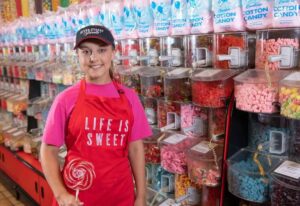
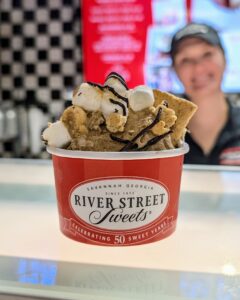
River Street Sweets takes a different approach entirely. Rather than an ice cream-only concept, it’s a candy superstore that includes homemade ice cream alongside pralines, hand-dipped chocolates, fudge, and gourmet popcorn. The open-kitchen model, where customers watch candy as it’s made fresh each day, creates an experiential retail environment. Because the product mix is broader, revenue doesn’t depend on ice cream alone.
Factors that Influence Ice Cream Store Franchise Cost

The investment range in any FDD represents a spectrum. Where you land depends on several variables specific to your situation and market.
Location and Real Estate Market
A shop in Manhattan costs more to build out than one in a mid-sized Southern city. Tourist areas often command higher rents but may deliver stronger foot traffic. Regional construction and labor rates affect your build-out budget directly, and permitting timelines vary by municipality.
Store Size and Format
A 1,200-square-foot inline retail space costs less than a 2,500-square-foot freestanding building. Kiosk formats reduce real estate costs but limit product offerings and seating capacity. The format you choose affects both upfront investment and long-term revenue potential.
Product Mix and Equipment Needs
A soft-serve-only concept requires different (and often less expensive) equipment than a full scoop shop with batch freezers. Concepts that add complementary products, like candy, baked goods, or coffee, may have different equipment lists but also create additional revenue streams that offset the higher initial cost.
Managing Seasonality in an Ice Cream Franchise
Ice cream sales peak in warmer months and dip in winter. This seasonality affects cash flow, staffing, and profitability in ways that pure-play ice cream concepts feel acutely.
Several strategies help smooth out seasonal revenue swings:
- Diversified product offerings: Concepts that sell hot cocoa, baked goods, candy, or coffee year-round reduce reliance on ice cream alone
- Tourist and destination locations: Foot traffic in travel destinations can offset seasonal slowdowns in residential areas
- Catering and special orders: Birthday cakes, event catering, and holiday gift boxes provide off-peak revenue
River Street Sweets’ candy superstore model naturally addresses seasonality. Pralines, chocolates, and confections sell year-round, with holiday gift-giving creating strong fourth-quarter demand that complements summer ice cream sales.
Financing Options for an Ice Cream Franchise
Most franchisees don’t pay the full investment from personal savings. Common funding sources include:
- SBA loans: Small Business Administration-backed loans through participating lenders, often with favorable terms for franchise investments
- Conventional bank loans: Traditional business loans from banks or credit unions
- Franchisor financing: Some franchisors offer in-house financing or have relationships with preferred lenders
- ROBS (Rollover for Business Startups): Using 401(k) or IRA funds without early withdrawal penalties through a specific legal structure
- Home equity: Borrowing against home equity for business investment
Lenders often view franchises favorably because the business model is proven. Having your financing strategy mapped out before you sign a franchise agreement keeps the process moving smoothly.
Steps to Open an Ice Cream Store Franchise
Most franchisors follow a similar ownership process. Understanding the steps helps you plan your timeline and know what to expect.
Step 1. Submit an inquiry and qualify
Complete an initial application. The franchisor reviews your financial qualifications and background to determine mutual fit.
Step 2. Review the Franchise Disclosure Document
You’ll receive the FDD at least 14 days before signing any agreement or paying any fees. This document contains all costs, obligations, territory information, and contact details for existing franchisees. Consider having a franchise attorney review it with you.
Step 3. Meet the leadership team
Discovery Day (or a similar meeting) gives you the chance to visit headquarters, meet the team, and assess whether the culture and support match your expectations.
Step 4. Sign the franchise agreement
Once both parties are ready to move forward, you’ll execute the legal agreement and pay the franchise fee.
Step 5. Complete training and build out your store
Attend the training program while site construction or build-out proceeds. Training typically covers operations, recipes, customer service, and business management.
Step 6. Open your doors
Grand opening day arrives with franchisor support to help you launch successfully in your community.
Start Your Sweet Ice Cream Franchise Journey with River Street Sweets
River Street Sweets offers a candy superstore franchise that includes homemade ice cream as part of a broader confectionery experience. With over 50 years of tradition as Savannah’s Original Candy Store, the brand combines an open-kitchen model, Southern hospitality, and comprehensive training to help franchisees build destination retail businesses.
The estimated initial investment of $419,550 to $844,000 covers store build-out, equipment, initial inventory, and a $40,000 franchise fee. The diversified product mix, from World Famous Pralines® to hand-dipped chocolates to homemade ice cream, creates multiple revenue streams and reduces seasonality risk.
To begin your journey as an ice cream franchise owner, contact us to download our free eBook.