Table of Contents
If you are researching a candy franchise, you are likely past the curiosity stage. You already know the category exists. Now you’re asking more serious questions about profitability, industry growth, licensing, equipment, and long-term viability.
This guide is designed to help you move from interest to informed decision-making. Instead of offering surface-level encouragement, we’ll walk through the most important financial, operational, and strategic questions investors should ask before choosing a candy franchise investment. The goal is simple: help you evaluate whether this industry aligns with your goals, resources, and long-term plans.
Is Candy a Good Business to Start?
Candy has several characteristics that make it attractive to entrepreneurs. It is a product category tied to celebration, gifting, tourism, and impulse buying. Unlike trend-based foods, candy maintains steady demand across age groups and seasons.
Is the candy industry growing? Broadly, the confectionery industry continues to benefit from product innovation, seasonal promotions, and premium gifting trends. Specialty sweets, nostalgic brands, and experiential retail formats have helped keep consumer interest strong.
Another advantage is simplicity. Compared to full-service restaurants, a candy franchise typically requires less operational complexity. There is no extensive menu preparation, no table service model, and fewer food safety variables.
However, like any retail concept, success depends heavily on location, brand strength, and operational discipline.
Is a Candy Business Profitable?
Is a candy business profitable? Profitability depends on margins, traffic, and cost control. Candy and confections often carry attractive markup potential, especially when products are branded, packaged for gifting, or positioned as premium treats.
High-margin items such as boxed assortments, specialty chocolates, and seasonal gift baskets can increase average transaction value. Upselling opportunities also play a major role in revenue growth.
That said, profitability is not automatic. Investors should evaluate:
- Startup costs and working capital requirements
- Royalty and marketing fees
- Lease obligations
- Labor and inventory management
A well-structured candy franchise investment provides operational systems that help protect margins and reduce guesswork.
Who Buys Candy and What Sells the Most?
Understanding customer behavior is essential when learning how to choose a candy franchise.
What age group buys the most candy? Families with children, teenagers, tourists, and gift shoppers are consistent buyers. However, adults purchasing for gifting, holidays, and corporate events also represent a significant segment.
What type of candy sells the most? Classic favorites such as chocolate assortments, caramel treats, pralines, and seasonal gift items often perform strongly. Location plays a role. Tourist areas may favor branded souvenirs and boxed gifts, while mall locations may see more impulse purchases.
A strong candy franchise system helps franchisees understand product mix strategy, seasonal merchandising, and inventory planning.
What Do You Need to Open a Candy Store?
Before committing to a candy franchise, investors should understand licensing and operational requirements.
What license do you need to open a candy store? Requirements vary by state and municipality, but typically include:
- Business registration
- Sales tax permits
- Health department approvals if food is prepared on-site
- Employer identification numbers
What equipment is needed to start a candy store? Depending on the concept, equipment may include display cases, shelving, packaging stations, point-of-sale systems, and potentially small-batch production tools.
One of the advantages of joining an established candy franchise is that much of this setup is standardized. Franchisors often provide guidance on equipment specifications, store layout, and vendor relationships.
What Makes a Candy Store Successful?
What makes a candy store successful goes beyond product quality. Several factors consistently influence performance:
- Prime retail location with strong foot traffic
- Clear brand identity and visual merchandising
- Friendly, high-energy customer service
- Strategic seasonal promotions
- Effective local marketing
Impulse buying plays a major role in confectionery retail. Stores positioned in tourist districts, entertainment areas, and high-traffic shopping corridors often benefit from spontaneous purchases.
A successful candy franchise also leverages emotional appeal. Candy is tied to celebrations, nostalgia, and gifting. Creating an engaging store experience can significantly impact repeat business.
How Much Money Do You Need to Start a Candy Business?
How much money do you need to start a candy business? The answer depends on the franchise brand, location, and store size.
Typical investment categories include:
- Initial franchise fee
- Build-out and leasehold improvements
- Fixtures and equipment
- Inventory
- Working capital
- Ongoing royalty and marketing contributions
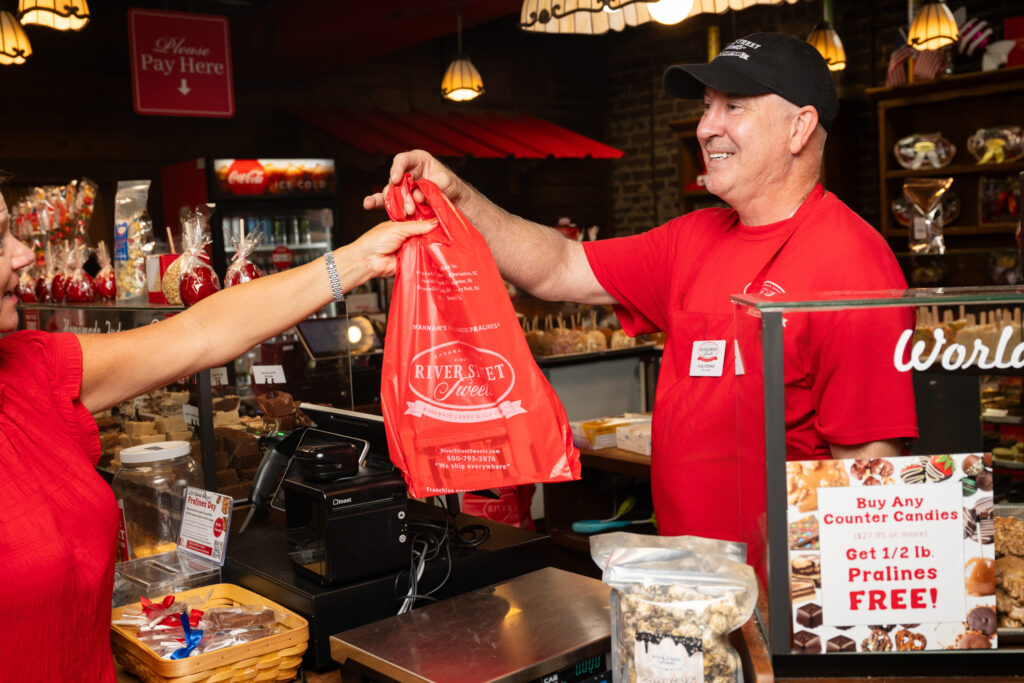
Investors should review the Franchise Disclosure Document carefully to understand total capital requirements. Comparing different candy franchise opportunities side by side can provide clarity on what each system includes and how support structures differ. For River Street Sweets®, for example, the initial investment ranges from $419,550 to $844,000—including an initial franchise fee of $40,000.
Is Candy the Best Food Franchise to Invest In?
What is the best food franchise to invest in? That depends on your personal goals, risk tolerance, and lifestyle preferences.
Candy franchises differ from traditional restaurant franchises in several ways:
- Lower operational complexity
- Smaller staff requirements
- Simplified production models
- Strong seasonal revenue opportunities
For entrepreneurs who prefer a retail environment with manageable overhead and strong brand storytelling, a candy franchise may present a compelling alternative to more labor-intensive food concepts.
How to Choose the Right Candy Franchise
If you are evaluating how to choose a candy franchise, focus on structured due diligence.
Ask yourself:
- Does the brand have a strong history and recognizable identity?
- What training and support systems are provided?
- How does the franchisor assist with site selection?
- What differentiates this concept from competitors?
- Does the business model align with your long-term financial goals?
The strongest candy franchise systems provide operational training, merchandising guidance, and site support to help franchisees launch with confidence.
Final Considerations Before Investing
A candy franchise can be an appealing opportunity within the broader food retail sector. It offers emotional appeal, gifting potential, and year-round consumer demand.
However, success depends on thoughtful planning. Evaluate market growth, startup costs, product demand, and the support offered by the franchise system.
If you are serious about investing in a candy franchise, take time to compare options, review financial documents, and speak with current franchisees. Structured research today can lead to more confident decisions tomorrow.